


Bra Sister Sizing Explained: Band, Cup and Fit
Sister sizes keep the same cup volume on a different band: one band down, one cup up (44C to 42D). Use them when the band is off but the cups fit.
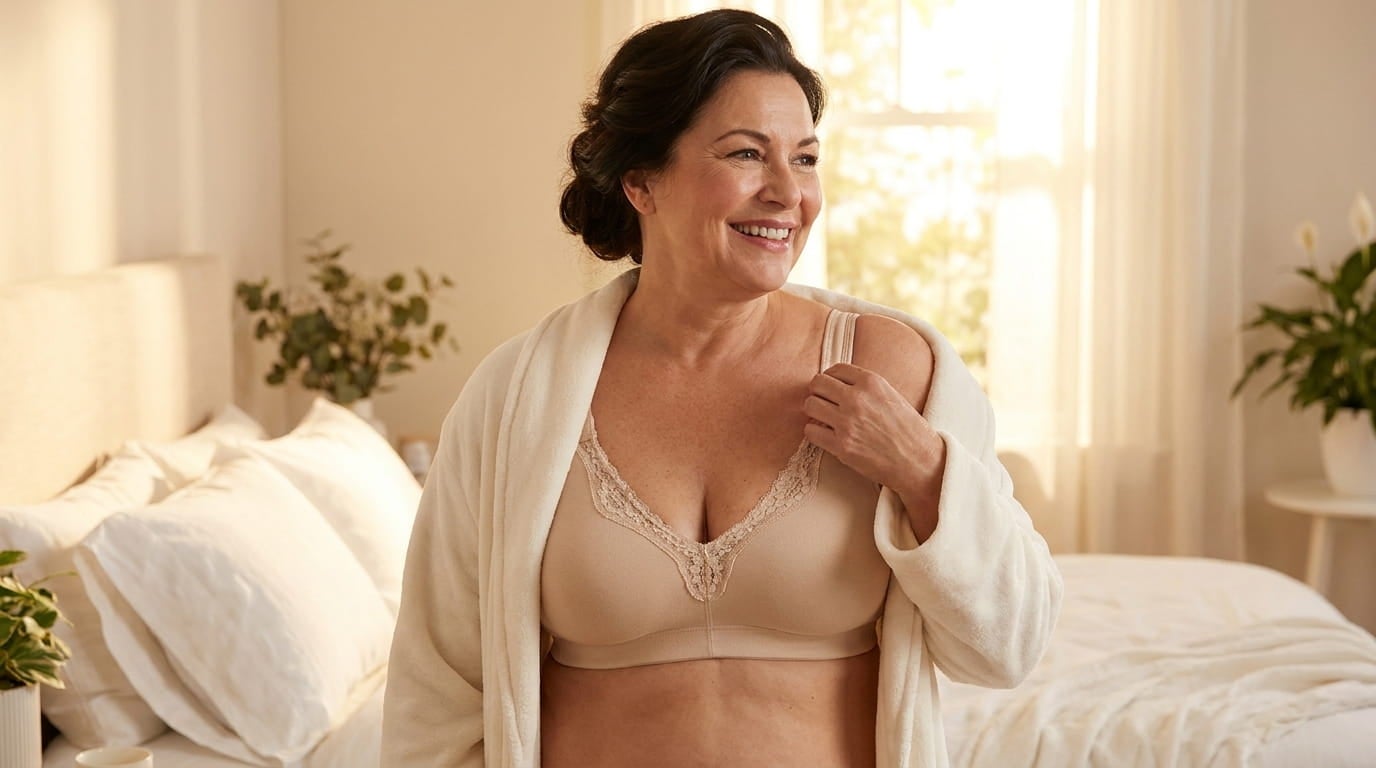
Your bra size is two measurements working together, so the same cup letter holds a different amount of room on a different band. Sister sizing is the quickest fix when the band feels wrong but the cups feel right. Every bra in our full-coverage bras collection lists its own band and cup range.
What is a sister size in bras?
A sister size is a different band and cup combination that holds the same cup volume. Cup letters are relative to the band: a D cup on a 42 band holds about as much as a C cup on a 44 band. So 44C and 42D are sister sizes.
The rule works in both directions:
- Smaller band, larger cup letter: go down one band size and up one cup (44C to 42D).
- Larger band, smaller cup letter: go up one band size and down one cup (44C to 46B).
Sister sizing solves band problems, not cup problems.
Sister size chart for common full-figure sizes
Find your usual size in the middle column; your sister sizes sit on either side.
Cup letters after D are not labeled the same way everywhere: some bras use DD and DDD, others move on to E, F and G. Check the size chart on the bra you are buying and count steps, not letters.
| Band down, cup up | Your usual size | Band up, cup down |
|---|---|---|
| 36DD | 38D | 40C |
| 36DDD | 38DD | 40D |
| 38D | 40C | 42B |
| 40DD | 42D | 44C |
| 42D | 44C | 46B |
| 44DDD | 46DD | 48D |
Should I go up a cup or a band?
Decide by where the problem is. If the band is wrong and the cups fit, use a sister size. If the band fits and the cups are wrong, keep the band and change only the cup letter.
One shopper wished she could get a smaller band and a larger cup. That is exactly what a sister size does, as long as the style is made in that combination.
| What you notice | What it usually means | Try this |
|---|---|---|
| Band rides up your back; cups fit | Band too loose | Down one band, up one cup (42D to 40DD) |
| Band digs in or leaves deep marks; cups fit | Band too tight | Up one band, down one cup (42D to 44C) |
| Cups gape or wrinkle; band fits | Cup too large | Same band, one cup smaller (42D to 42C) |
| Cups overflow at the top or sides; band fits | Cup too small | Same band, one cup larger (42D to 42DD) |
| Tight all over, from band to cups | Whole size too small | Up one band, same cup letter (42D to 44D) |
How do I check band and cup fit at home?
Fasten on the loosest hook and check the band first, because it does most of the supporting.
- Check the band is level. It should sit straight across your back. If it climbs, the band is too loose.
- Slide two fingers under the band. A snug but comfortable fit lets them in without the band pulling away.
- Lean forward and settle in. Scoop each side into the cup before judging the fit.
- Check the cup edges. No gaping at the top, no spilling over the top or sides.
- Adjust the straps last. Straps fine-tune comfort. If you need to tighten them hard to feel supported, revisit the band.
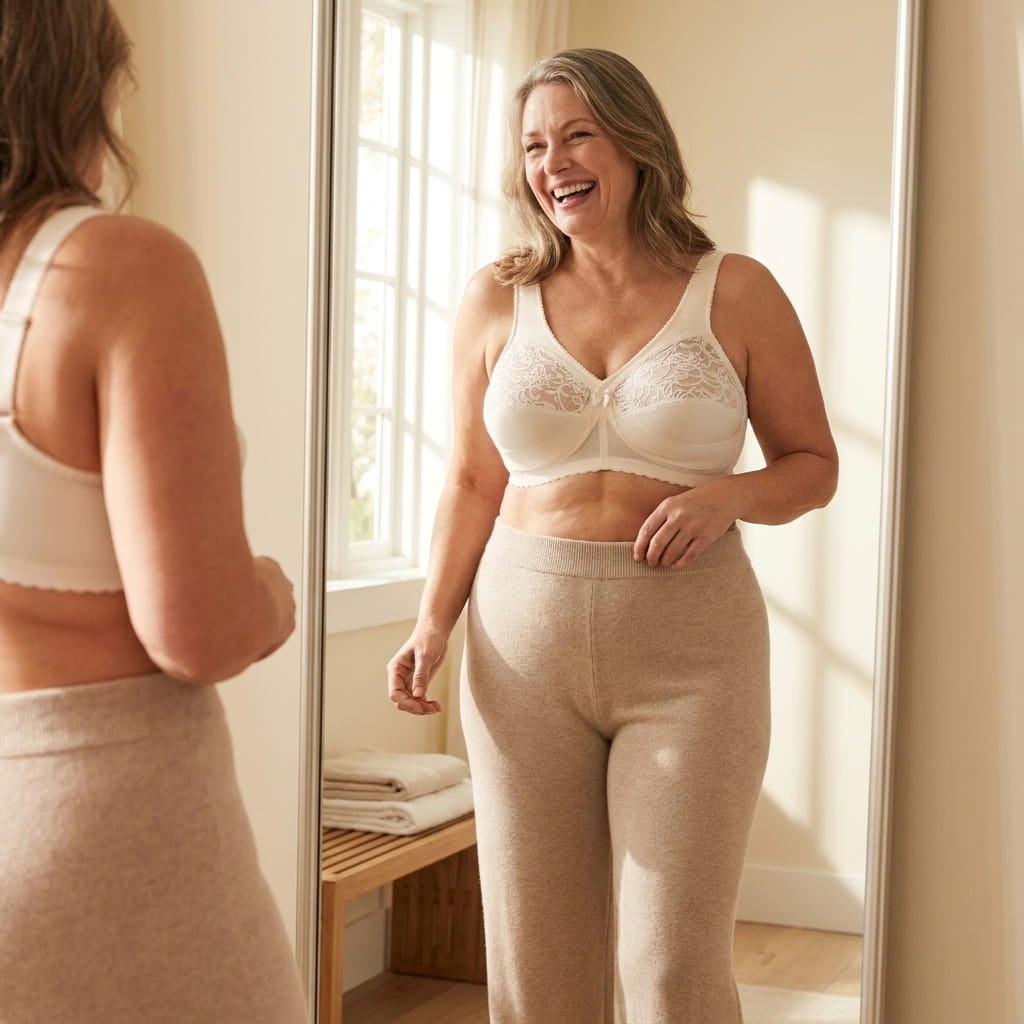
Why does my bra size change from style to style?
Construction changes how a size feels. Cup shape, padding, band width and whether there is an underwire all affect how much room a labeled size gives you.
The main differences to watch for:
- Soft, unlined cups stretch and mold to you, so they tend to forgive small size differences.
- Contoured or seamed cups hold a set shape. If you are between sizes, these show it sooner.
- Underwire sets a fixed cup width. Underwire styles usually need a closer match on both band and cup.
- Wire-free support leans on the band and cup structure instead. Our Catherines wireless bras use different methods, from stretch underbands to crossover support.
Size ranges differ too. Here is how five popular wireless styles are sized, taken from each product page:
If a contoured style felt tight in your usual size, a soft-cup style in the same size is often an easier switch than changing sizes. Shoppers who find their fit tend to praise the material and the coverage first.
| Bra | Band sizes | Cup sizes | Cup and support build |
|---|---|---|---|
| Cotton Comfort Wireless Bra | 38–54 | A–G | Soft, unlined cups with stretch underbust elastic |
| Glamorise Magic Lift Support Wireless Bra | 36–56 | B–J | Contoured cups with a cushioned crossover band |
| Wireless Back Smoothing Bra | 40–54 | B–DDD | Soft adaptive cups with a smoothing U-shaped back |
| Playtex 18 Hour Ultimate Shoulder Comfort Wireless Support Bra | 36–54 | B–H | Fuller, softly seamed cups and wider cushioned straps |
| Comfort Choice Wireless Back-Close Cotton Bra | 38–54 | B–G | Double-lined, seamed cups with adjustable straps |
How do sport and minimizer bras size compared with everyday bras?
Expect them to feel different in your usual size. Sports bras are built to hold you still, so many feel snugger. Minimizers reshape and redistribute, so the cup may feel fuller or tighter than an everyday cup with the same label.
- Start with your everyday size, then read the size chart and fit notes on that specific style.
- If it feels tight all over, go up one band and keep the cup letter.
- If only the band feels tight, use the sister size with the larger band.
A shopper who found a bra "tight all over" in her usual size was describing a whole size that was too small, not a band-only problem.
What if a style does not come in my band size?
Use your sister size to cross into the style's range. If you wear a 38DD and the style starts at a 40 band, its sister size is 40D: one band up, one cup down, about the same cup volume.
This only works one step at a time, and only when the band you move to still feels secure on the loosest hook. If it does not, look for a style made in your exact band. Our full range of bras lets you compare band and cup ranges across styles.
Frequently asked questions
I wear a 38DD and reviews say the cup runs big. What size should I order?
Keep your 38 band and try one cup smaller, a 38D. The band carries most of the support, so leave it alone if it fits. If the 38D cups feel snug or you spill over the top, go back to 38DD.
Does my sister size feel exactly the same as my usual size?
Not exactly. The cup holds about the same volume, but the band length, strap placement and the width of the cup base all shift slightly. Treat a sister size as a strong starting point, then check the fit when you try it on.
How many sister sizes away can I go?
Stay within one step. Each band change moves the cup's width and the band's support at the same time, so going two or three steps away usually trades one fit problem for another.
How often should I re-check my bra size?
Re-check whenever your bras start fitting differently: the band rides up, the cups gape, or the straps slip. Bodies change over time, and a quick measurement saves a round of returns.