


Wide Width Winter Boots for Women: A Fit-First Guide
Choose winter boots by foot width first (W or WW), then calf fit, shaft height and a slip-resistant sole. Ankle booties are the easiest wide-width fit.

Winter boots fit in a set order: width, then calf, then shaft height, then sole. Get width right and the rest is easier. Start with our wide-width winter boots, then narrow down using the checks below.
What order should you check fit in?
Check foot width first, because no other feature can fix a boot that pinches across the ball of your foot. Then confirm calf room, choose a shaft height, and finish with sole and lining.
- Foot width: W (wide) or WW (extra wide), based on where your current shoes press.
- Calf fit: regular or wide calf, based on a tape measurement rather than a guess.
- Shaft height: ankle, mid-calf or tall, based on how much snow and cold you face.
- Sole and warmth: a treaded, slip-resistant outsole and a lining suited to your winters.
Do you need W or WW width?
Choose W if regular shoes feel snug across the ball of your foot or leave red marks by evening. Choose WW if W-width shoes still press on the sides, or if your feet swell over the day or after standing.
Boots are less forgiving than flats because the upper wraps the whole foot and ankle. If you sit between widths in shoes, the wider option is often more comfortable in a boot, especially with thick socks.
| Width | Usually Right If | Watch For |
|---|---|---|
| W (wide) | Medium widths pinch at the ball of the foot or toes | Pressure on the little toe after an hour of wear |
| WW (extra wide) | W widths still press on the sides, or feet swell during the day | Heel slip, which can mean the boot is now too roomy |
How do you measure your calf for winter boots?
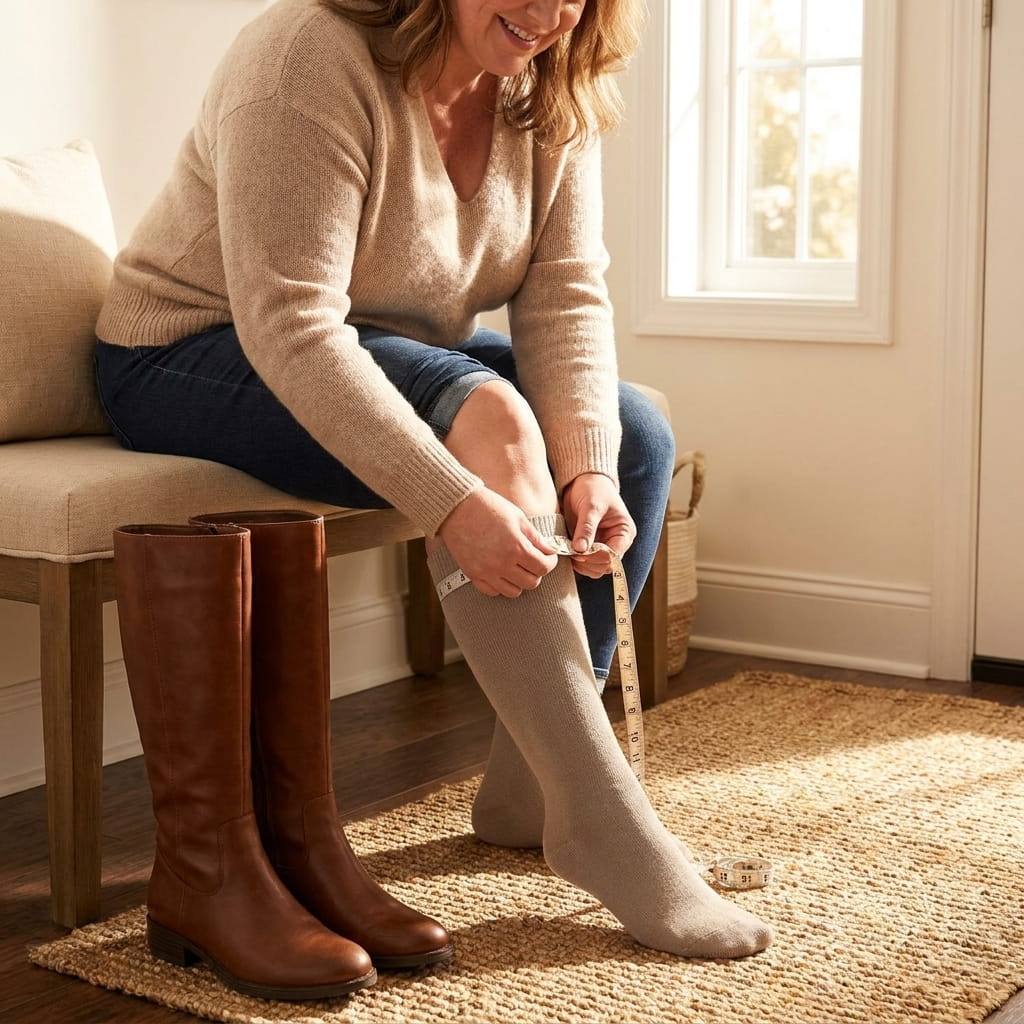
Wrap a soft tape around the widest part of your calf while seated, over the socks or leggings you will wear. Compare that number to the boot’s listed calf circumference, leaving a little room to slide a finger in.
- Sit with your foot flat on the floor and your knee bent at a right angle.
- Find the fullest part of your calf, or calf circumference, usually a few inches below the back of the knee.
- Wrap the tape snugly but not tightly and note the number.
- Measure both legs and use the larger number.
- Measure later in the day, when legs tend to be at their fullest.
Calf circumference is one of the most-asked boot questions, and it varies from style to style. Check each product page size chart for our listed measurements by shoe size. If your number sits above a regular-calf boot, browse wide calf boots or choose an ankle height, where calf size does not matter.
What shaft height works best in winter?
Shaft height is measured from the arch of the boot to the top of the shaft. Taller shafts keep out more snow but add a calf fit to get right; ankle heights skip the calf entirely.
When a listing gives a shaft height, compare it to your own leg: measure from your arch up to where you want the boot to stop. That tells you whether a “mid-calf” boot will land below your fullest point or right on it.
| Height | Calf Fit Needed? | Best For |
|---|---|---|
| Ankle boot or bootie | No | Errands, cleared sidewalks, wearing with pants |
| Mid-calf | Sometimes, at the top opening | Slush, light snow, tucking in leggings |
| Tall or knee-high | Yes | Deeper snow, wind, wearing with skirts and dresses |
Are ankle booties the easiest wide-width fit?
Yes. Ankle boots only need to fit your foot and ankle, so a W or WW width is usually all it takes. There is no calf opening to measure, and they sit easily under pants.
They also come off and on quickly, which matters on days of running in and out. Browse Catherines ankle boots and booties if you want one pair that handles cold mornings without a calf fit to solve. Side zips make them easier still if you have a high instep.
Which winter features are worth checking?
Beyond fit, look at the sole, the lining, the closure and the cushioning. These decide whether a boot is comfortable on an icy walk or a long day, not just in the fitting room.
- Outsole: deep, multi-directional tread grips better on wet and packed snow than a smooth sole.
- Lining: a warm lining matters more the longer you are outdoors; check whether it adds bulk inside the toe.
- Closure: a long side zip helps wide feet and high insteps slide in without forcing the boot.
- Water resistance: only count on it when the product description says so.
- Cushioning: if you stand for a full shift, look for a padded footbed you could replace with your own insert if needed.
How should wide-width boots feel when you try them on?
A well-fitting boot feels snug at the heel and roomy at the toes. Try boots on in the afternoon, wearing your winter socks, and walk on a hard floor for a few minutes before deciding.
- You can wiggle your toes freely, with about a thumb’s width past your longest toe.
- No seam or edge presses on the side of your foot at the ball.
- Your heel lifts only slightly as you walk.
- The zip closes over your calf and socks without straining.
- The top of the shaft does not rub or dig when you bend your knee.
If any point on that list fails, try the next width up or a different shaft height before giving up on the style. A boot that fits at the store should still feel good after a full winter day.
Frequently asked questions
Should I size up instead of buying a wide width?
Usually not. Sizing up adds length, not just width, so your heel can slip and the boot can bend in the wrong place. A W or WW width keeps your true length while adding room across the foot.
I need a wide foot but my calves are average. What should I shop for?
Look for a wide foot width with a regular calf. Foot width and calf width are separate fits, so a wide-calf label alone does not mean the foot is wide, and the reverse is also true.
What socks should I wear when trying on winter boots?
Wear the thickest socks you expect to use outdoors. Winter socks can take up noticeable room, so a boot that feels right over thin socks may feel tight on a cold morning.
What if the style I want is sold out in my width?
Availability changes by color and size, so check the other colors of the same style first. If none fit, filter the category by your width and compare similar shaft heights and soles.